
Apr 03, 2015 in Publisher's Weekly
Wednesday, April 8, 2015
Saturday, April 4, 2015
50 Books to Read Before You Die
This is a list of books that can be found on a stainless steel bookmark available in most book stores. A great gift item for the book lover in your life. Fifty classic literary works from the world's great writers listed on a stainless steel bookmark. The only decision left to make is which order to read them in!
| Source: barnesandnoble.com · Added by Krzysztof Dąbrowski |
79,269 users · 442,687 views
How many have you read?
Tuesday, March 31, 2015
The Great 2014 Reading Habits Survey: The Results
In our first reader poll of 2015, we got all kinds of curious about your reading habits last year. 2511 awesome Riot readers responded, and it took us a while to dig through all the juicy data. And we’re still going! This post presents the reading and spending habits of the Riot readers who responded to the survey.
Before we dig in, it’s important to know that we have now way of knowing how representative (or not) the readers who opted in to this survey are of the general Book Riot audience, and no way of verifying these self-report numbers. But we trust our readers and have no reason to think they would lie in an anonymous survey, so. Let’s do this!
Friday, March 27, 2015
B&N Execs Tout Promise of Retail-Digital Combination
 When the spin-off of its college division is completed later this year, Barnes & Noble plans to sell both print and digital books, B&N Inc. CEO Mike Huseby told analysts during a conference call last week to discuss third-quarter results. Huseby said B&N remains committed to supporting Nook products and that executives believe Nook’s best chance for success comes from leveraging its connection to B&N’s retail stores. B&N’s trade stores and Nook have “naturally overlapping customers and business partners” that focus on reading, Huseby said. B&N has no plans to sell Nook, and its current plan is to offer customers print and e-books, Huseby elaborated.
Monday, March 23, 2015
Doing All Right: Taking the Temperature on Six Indie Bookstores
Mar 20, 2015
 All the stores we surveyed this year are doing well. One factor in their success is that several of their owners have previous experience. Naomi Chamblin, co-owner of Napa Bookmine, in Napa, Calif., brings many years of experience to her new venture. She honed her bookselling chops at the largest used bookstore (55,000 sq. ft.) in northeast Florida: Jacksonville’s Chamblin Bookmine, which was founded by her father, Ron Chamblin. Brian Lampkin, majority owner of Scuppernong Books, in Greensboro, N.C., is also an experienced bookseller. He founded Rust Belt Books in Buffalo, N.Y., which he sold before heading south.
Although the economics of operating an independent bookstore have improved since the end of the Great Recession, running a new store still poses challenges. For the past few years, PW has checked in annually with half a dozen bookstores from across the country that have been open for two years or less to see how they’re faring.
Thursday, March 19, 2015
Toni Morrison: Write, Erase, Do It Over
Interview by Rebecca Gross
 Talking to Toni Morrison about failure is a bit like talking to Einstein about stupidity: it’s incongruous, to say the least. At 83, Morrison is one of the world’s best-known and most successful novelists, her awards list crammed with the heavyweights of literary prizes: among them, the 1988 Pulitzer Prize and American Book Award for Beloved; the Nobel Prize in Literature in 1993 (the last U.S. author to receive it); the Presidential Medal of Freedom in 2012; and most recently, the Ivan Sandroff Lifetime Achievement Award from the National Book Critics Circle. As these accolades piled up, Morrison continued to work full-time as an editor or a professor of writing and literature—she wrote her first novel, The Bluest Eye (1970), while teaching at Howard University and raising two young sons on her own. Since then, she has written ten more novels (God Help the Child will be published later this year), several children’s books, two plays, and a number of nonfiction works. In all her projects, her words are at once incisive as a knife and poignant as a lullaby, weaving mesmerizing narratives that probe the complexities of the African-American experience. -
 Read the Rest
Sunday, March 15, 2015
James Patterson to Donate $1.25M to Libraries
Mar 09, 2015 Publisher's weekly
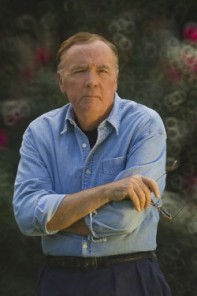
As part of a new initiative designed to raise awareness about the state of school libraries in the U.S., James Patterson announced that he will make a $1.25 million donation to school libraries across the country this year. Scholastic will match each dollar donated with bonus points, which teachers can use to acquire books and other materials for their classrooms, at every school that receives an award.
The program will launch with $1.25 million in grants that will be awarded on a rolling basis throughout the year. As of March 9, those interested in participating will be able to nominate a school for a donation by filling out a form with their school’s information and a short description of how their school library would use the money. All schools in the U.S. that serve students pre-K through 12th grade are eligible to win a grant; donations will range from $1,000 to $10,000 per school.Wednesday, March 11, 2015
Profits Rose 14% at Barnes &Noble in Third Quarter
 A large decline in the net loss in its Nook division helped net income increase 14% at Barnes & Noble in the third quarter ended January 31, 2015 over the comparable period in fiscal 2014. Net income rose to $72.1 million, while EBITDA also increased 14%, to $197.4 million. Total revenue fell 1.7%, to $1.97 billion. The downsizing of its Nook division cut the loss in the unit to $29.3 million in the quarter from $61.8 million in last year’s third quarter. Revenue also fell significantly, declining about 50%, to $77.5 million. According to B&N, device and accessories sales fell 63%, to $37 million, while digital content sales dropped 29.3%, to $41 million. The sales decline was attributed to “lower device unit sales volume.”
Tuesday, March 3, 2015
How Children Learn To Read
The New Yorker BY MARIA KONNIKOVA FEBRUARY 11, 2015Why is it easy for some people to learn to read, and difficult for others? It’s a tough question with a long history. We know that it’s not just about raw intelligence, nor is it wholly about repetition and dogged persistence. We also know that there are some conditions that, effort aside, can hold a child back. Socioeconomic status, for instance, has beenreliably linked to reading achievement. And, regardless of background, children with lower general verbal ability and those who have difficulty with phonetic processing seem to struggle. But what underlies those differences? How do we learn to translate abstract symbols into meaningful sounds in the first place, and why are some children better at it than others? (read the rest)
Subscribe to:
Posts (Atom)


